One of the biggest blind spots in the racquet sports industry is how clubs think about their members. Most clubs segment members using only one lens: court usage. Who plays the most hours? Who books the most courts? Who shows up most often?
On the surface, that seems logical. After all, racquet clubs are built around courts. But when you analyze member behavior more deeply, you discover something important: the members who create the most value for a club are often not the ones playing the most hours.
A successful club is far more than a court reservation system. It is a community platform, a social hub, and increasingly a hospitality business. When you view the data through that lens, member segmentation becomes much more sophisticated — and much more valuable.
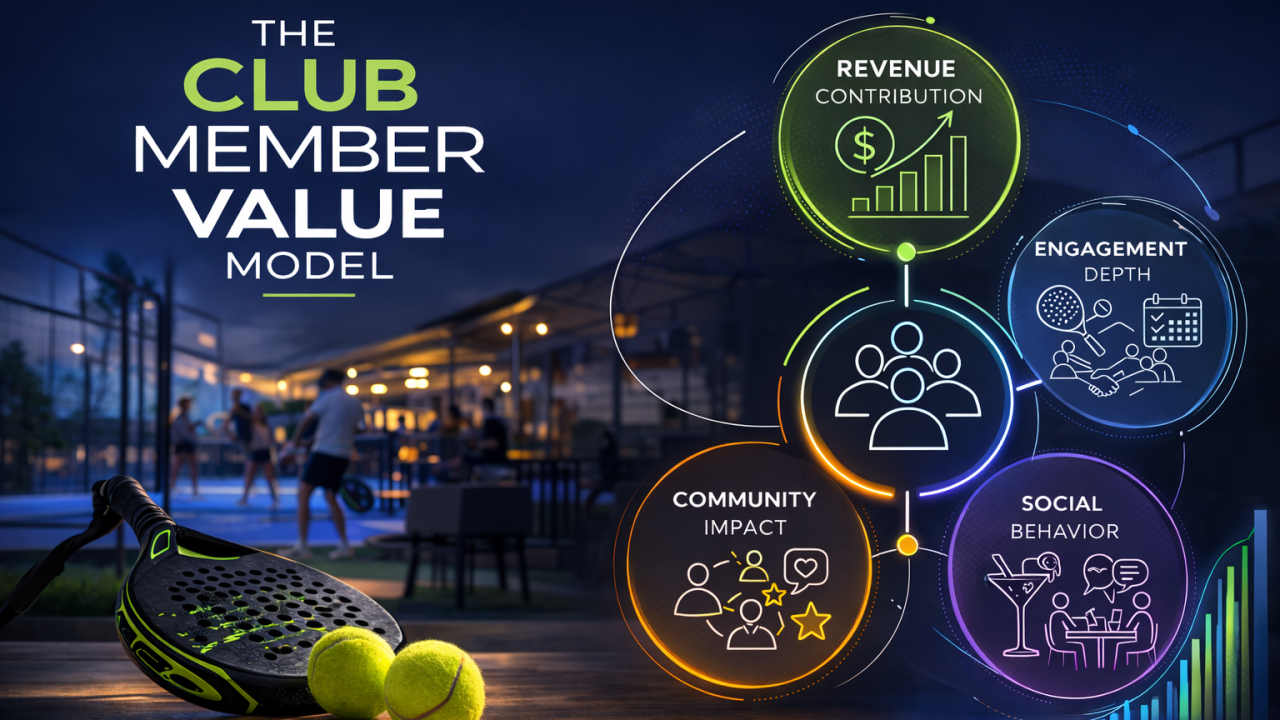
Four Dimensions of Member Value
The first dimension is revenue contribution. Membership dues are only part of the picture. Members also contribute through lessons, clinics, leagues, tournaments, guest fees, retail purchases, and food and beverage spending. When these revenue streams are combined, clubs can better understand true Average Revenue Per User (ARPU) and see that some members generate several times as much revenue as others.
The second dimension is engagement depth. Playing frequency is only one signal of engagement. Members who participate in leagues, tournaments, clinics, open play sessions, and special events tend to become more deeply connected to the club. These activities build relationships and create routines — both powerful drivers of long-term retention.
The third dimension is community impact. Every club has members who serve as social anchors. These individuals bring guests, refer new members, participate in events, and advocate for the club within their personal and professional networks. Measuring referral activity or Net Promoter Score helps clubs identify their strongest advocates and most influential members.
The fourth dimension is social behavior inside the club environment. One of the most overlooked signals of member value is what happens off the court. Members who stay after play, attend social events, or spend time in the lounge are often the ones helping create the culture of the club. Food and beverage activity is frequently a proxy for dwell time and social engagement — strong indicators of long-term loyalty.
Two Members, Very Different Value
Consider two hypothetical members. The first plays four times a week but rarely attends events, never brings guests, and leaves immediately after playing. The second plays once a week but frequently brings guests, participates in social events, refers new members, and regularly spends time at the club after matches.
If you measure only court hours, the first member appears more valuable. But if you measure the full ecosystem of behavior — revenue, engagement, community influence, and social participation — the second member may generate significantly more value, drive new membership growth, and help build the community that keeps others coming back.
What This Means in Practice
Modern clubs are increasingly adopting member value models rather than simple usage metrics. By combining engagement data, revenue contributions, cultural participation, and satisfaction signals, clubs can identify members at risk of churn, recognize highly influential members who should be nurtured, and design programming that strengthens the community rather than simply filling court time.
At the end of the day, the most successful clubs are not simply facilities where people play. They are places where people connect, compete, and build relationships. Understanding that difference is the first step toward smarter member segmentation — and for clubs that embrace it, the rewards are significant: stronger communities, better retention, and a more resilient business model.